
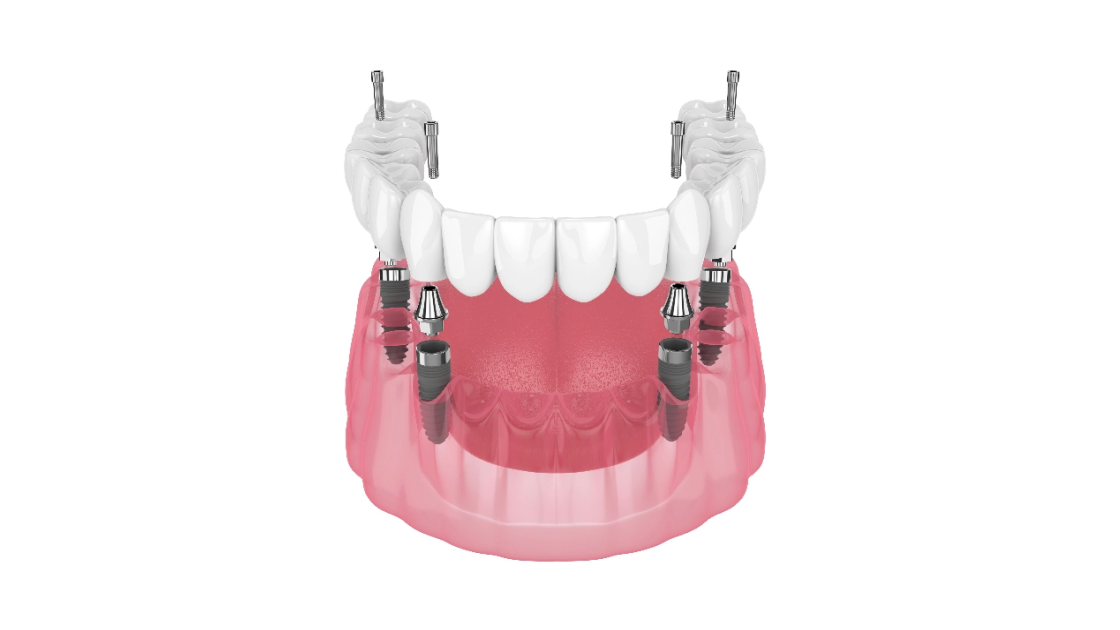
If you are comparing alternatives to dental implants, recovery time matters. All-on-4 dental implants offer a fixed solution for replacing an entire arch of missing teeth. However, the treatment involves surgery, followed by a healing period before your dentist places the final restoration.
Understanding the All-on-4 recovery timeline helps you prepare for discomfort, dietary changes, and follow-up appointments. Healing occurs in stages, starting with gum tissue recovery and continuing as the implants bond with your jawbone.
How Long Does It Take to Heal After All-on-4 Dental Implants?
Initial recovery after All-on-4 surgery usually takes 1 to 2 weeks, while complete healing and implant integration often take 3 to 6 months. Some patients need more time to heal, depending on their bone health, medical history, and treatment complexity. During the first week, swelling and discomfort gradually decrease. Your gums generally heal within two weeks, while deeper tissues continue to recover.
According to the Cleveland Clinic, dental implants take about 3 to 9 months to integrate with the jawbone fully. Your dentist monitors this process before deciding when to place your permanent prosthetic teeth.
What Is the All-on-4 Dental Implant Recovery Timeline?
All-on-4 recovery follows several stages. Each stage involves different healing changes and care requirements.
| Recovery Period | What to Expect |
| First 24 to 48 hours | Mild bleeding, swelling, and discomfort |
| Days 3 to 7 | Swelling begins decreasing, and tenderness improves |
| Weeks 1 to 2 | Gum tissues heal, and daily activities become easier |
| Weeks 3 to 6 | Soft tissue recovery continues, and discomfort decreases |
| Months 2 to 3 | Jawbone continues integrating with the implants |
| Months 3 to 6 | Implant stability improves, and your dentist assesses readiness for final teeth |
These timeframes provide general guidance. Your recovery depends on how your body responds to surgery and whether additional procedures were necessary.
What Should You Expect During the First Week After All-on-4 Surgery?
The first week requires particular attention because your surgical sites remain sensitive. You might experience:
- Swelling: Facial swelling often peaks within 48 to 72 hours, then gradually decreases.
- Discomfort: Mild to moderate soreness is common during the first several days.
- Minor bleeding: Light bleeding or blood-tinged saliva sometimes occurs shortly after surgery.
- Bruising: Temporary discoloration around your cheeks or jaw might develop.
- Eating difficulties: Tender gums and temporary teeth require a soft-food diet.
Contact your dentist if pain or swelling worsens rather than improves.
How Long Does It Take for All-on-4 Implants to Fuse With the Jawbone?
All-on-4 implants need several months to form a stable connection with your jawbone. Dentists call this process osseointegration. During osseointegration, bone grows around the titanium implant surfaces, strengthening their support.
Several factors influence healing:
- Jawbone density and overall bone health
- Smoking and tobacco use
- Diabetes management
- Oral hygiene habits
- Implant positioning and surgical complexity
- Excessive chewing pressure during recovery
Even when your gums feel comfortable, the underlying bone continues healing. Follow your dentist’s dietary instructions throughout this period.
What Foods Should You Eat After All-on-4 Surgery?
Your diet plays an important role in protecting healing implants. During the initial recovery period, choose foods requiring minimal chewing.
Recommended foods include:
- Yogurt and smoothies without seeds
- Mashed potatoes and soft vegetables
- Scrambled eggs
- Oatmeal
- Soft fish
- Blended soups served at a comfortable temperature
Avoid hard, crunchy, sticky, and chewy foods until your dentist approves dietary changes.
Even if you receive temporary fixed teeth immediately after surgery, they require protection from excessive biting forces while your jawbone heals.
How Do You Speed Up Healing After All-on-4 Dental Implants?
Following postoperative instructions helps reduce complications and supports predictable recovery.
- Maintain oral hygiene: Clean your mouth as your dentist instructs without disturbing the surgical sites.
- Follow dietary restrictions: Continue eating approved soft foods throughout the recommended healing period.
- Avoid smoking: Tobacco interferes with tissue healing and increases implant-related complications.
- Take prescribed medications: Follow the recommended dosage and treatment schedule.
- Limit strenuous activity: Avoid intense exercise during the initial recovery period.
- Attend follow-up appointments: Let your dentist assess gum healing, implant stability, and the fit of the temporary restoration.
What Are the Alternatives to Dental Implants?
Some patients prefer alternatives to dental implants because of the surgery, recovery time, or cost. Common options include:
- Complete dentures: Removable appliances replace an entire arch of missing teeth without implant surgery.
- Partial dentures: Removable restorations replace several missing teeth while preserving remaining natural teeth.
- Dental bridges: Fixed restorations replace missing teeth using neighboring natural teeth for support.
These treatments avoid implant surgery but differ in stability, maintenance, and long-term bone preservation. Read How to Fix Missing Teeth Without Implants for a detailed comparison of alternatives to dental implants.
When Should You Contact Your Dentist During All-on-4 Recovery?
Contact your dentist when symptoms suggest complications rather than normal healing.
Warning signs include:
- Persistent or increasing pain after several days
- Swelling accompanied by fever
- Heavy or uncontrolled bleeding
- Pus or unusual discharge around surgical sites
- A loose implant component or temporary restoration
- Difficulty swallowing or breathing
Seek emergency medical attention for breathing difficulties, severe swelling affecting your airway, or bleeding you cannot control.
Conclusion
Healing after All-on-4 dental implants requires patience, consistent oral hygiene, and adherence to postoperative instructions. Although initial discomfort usually improves within one to two weeks, complete implant integration takes several months. Your dentist will monitor healing before recommending permanent restoration placement. If you are considering All-on-4 treatment or comparing alternatives to dental implants, a comprehensive evaluation helps determine the appropriate approach. Understanding your oral health, bone condition, and treatment expectations supports informed decisions and a smoother recovery experience throughout your treatment journey.
Schedule your All-on-4 consultation Today
Schedule your All-on-4 consultation at Osler Dental Professionals in Towson, MD. Our dental team will evaluate your oral health, explain the healing process, and develop a personalized treatment plan.
Call (443) 496-3166 or visit 7600 Osler Drive, Ste 100, Towson, MD 21204, to schedule your appointment.
FAQs
How painful is All-on-4 recovery?
Most patients experience soreness, swelling, and tenderness during the first several days. Prescribed or recommended pain medication helps manage discomfort. Pain should gradually improve as healing progresses.
When will I return to work after All-on-4 surgery?
Patients with desk jobs sometimes return within a few days. Physically demanding work requires additional recovery time. Your dentist will recommend a suitable schedule based on your procedure.
How long should I eat soft foods after All-on-4?
Your dentist will generally recommend a soft-food diet for several weeks or longer. Follow the prescribed restrictions until the implants are stable enough, and your dentist approves firmer foods.
Will my gums heal before the implants fully integrate?
Yes. Your gums generally heal within one to two weeks, while the jawbone requires several months to bond with the implants. Surface healing does not mean the implant is fully integrated.
Are dentures faster than All-on-4 dental implants?
Traditional dentures avoid implant integration, although extractions and denture adjustments still require healing. Patients exploring alternatives to dental implants should compare treatment duration, stability, maintenance, and comfort.