
Missing teeth can make it harder to chew, speak, and smile with confidence. Dental implants are one of the most reliable ways to replace a missing tooth, but not every implant crown is attached the same way. One option you may hear about is a screwless dental implant. So, what are screwless dental implants?
A screwless dental implant typically means the final crown is cemented onto the connector piece rather than attached with a visible screw. This can help the crown look smooth and natural, especially for front teeth. Still, it is not the right choice for every patient. Your dentist will check your bite, bone health, and gum condition before deciding which implant type is best for you.
What Does “Screwless Dental Implant” Mean?
A screwless dental implant usually refers to a cement-retained implant crown. The implant post is still placed in the jawbone, similar to a traditional dental implant. The difference is how the final crown is attached.
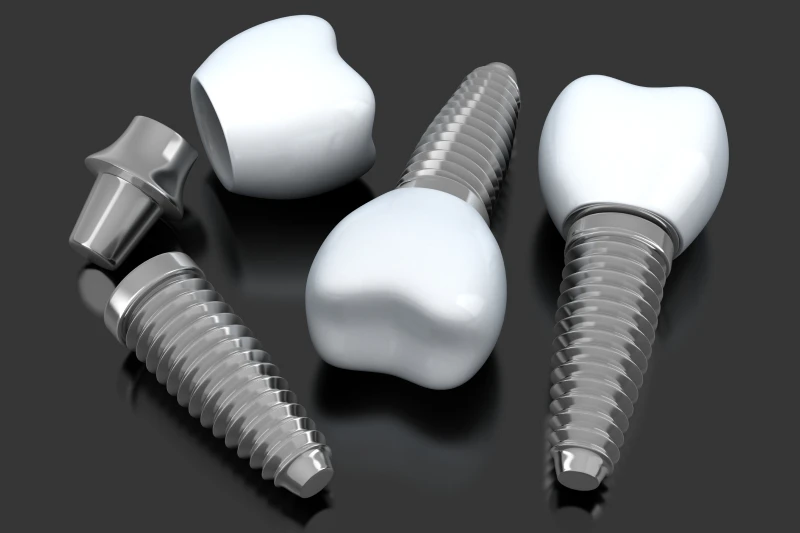
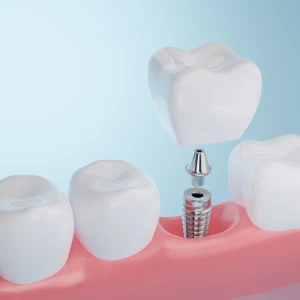
A dental implant usually has three main parts:
- Implant post: The small titanium or ceramic post placed in the jawbone
- Abutment: The connector between the implant post and the crown
- Crown: The visible tooth-shaped restoration
With a cement-retained design, the crown is bonded onto the abutment with dental cement. This means there is no visible screw-access hole through the top of the crown. For some patients, this can create a more natural-looking result in visible areas of the smile.
How Do Screwless Dental Implants Work?
Screwless dental implants follow a treatment process similar to that of many traditional dental implants. The main difference happens during the final crown placement.
The process usually includes:
- Consultation and imaging: Your dentist examines your mouth, reviews your bone health, and uses advanced imaging technology to plan treatment.
- Implant placement: The implant post is placed into the jawbone to replace the missing tooth root.
- Healing period: The jawbone heals around the implant post over several months.
- Abutment placement: Once the implant is stable, your dentist places the connector piece.
- Crown placement: A custom crown is cemented onto the abutment.
- Bite adjustment: Your dentist checks your bite to make sure the crown feels comfortable and functions properly.
If you have bone loss, your dentist may recommend a bone graft before implant placement. A strong foundation helps support the implant and improves long-term stability.
Screwless vs. Screw-Retained Dental Implants: What Is the Difference?
The main difference is how the crown is attached. Screw-retained crowns use a small access screw, while screwless, or cement-retained, crowns are bonded to the abutment with dental cement and have no visible screw-access hole. A systematic review of screw- versus cement-retained implant restorations found that each design carries its own set of technical and biological trade-offs rather than one being universally superior.
| Feature | Screwless / Cement-Retained Crown | Screw-Retained Crown |
| Crown attachment | Cemented onto the abutment | Attached with a screw |
| Appearance | No visible screw-access hole | Access hole is filled with tooth-colored material |
| Repair access | Harder to remove | Easier to remove |
| Common concern | Excess cement near the gums | Screw loosening or access-hole wear |
| Often considered for | Visible teeth | Cases where easy access matters |
Both options can work well when planned properly. Your dentist will recommend the design that fits your bite, bone health, gum position, and long-term treatment needs.
What Are the Benefits of Screwless Dental Implants?
Screwless dental implants can be helpful for the right patient and tooth location. They are often considered when appearance is an important part of the treatment plan.
Possible benefits include:
- Natural appearance: There is no visible screw-access hole through the crown, which can help the tooth look smooth and natural.
- Useful for visible teeth: This design may work well for front teeth or other areas that show when you smile.
- Smooth crown surface: A cement-retained crown does not require an access channel to be filled with tooth-colored material.
- Comfortable function: Once properly placed and adjusted, the crown should feel stable during normal chewing.
- Helpful in certain implant positions: If a screw-access hole would appear in a visible or inconvenient spot, a cement-retained crown may be considered.
These benefits depend on careful planning, proper crown fit, and precise cement cleanup around the gumline.
What Are the Downsides of Screwless Dental Implants?
Screwless dental implants are not ideal for every case. A balanced treatment plan should consider appearance, function, and future maintenance.
Possible downsides include:
- Harder to remove: If the crown needs repair or replacement, a cement-retained crown may be more difficult to remove than a screw-retained crown.
- Cement residue risk: Extra cement can sometimes remain below the gumline. If not removed carefully, it may irritate the tissue around the implant.
- Not ideal for every bite: Patients who grind their teeth or place heavy pressure on the implant may need a restoration that is easier to access and adjust.
- Technique-sensitive placement: The success of a cement-retained crown depends on proper fit, careful cementation, and thorough cleanup.
- May not be best for larger cases: Full-arch or multi-tooth implant restorations often need easier access for future maintenance.
For these reasons, your dentist should recommend the crown attachment style based on your specific needs, not just appearance.
Who Is a Good Candidate for Screwless Dental Implants?
You may be a good candidate for a screwless dental implant if your case calls for a natural-looking crown and your dentist can safely plan a cement-retained restoration.
You may qualify if:
- You are missing one tooth.
- The missing tooth is in a visible area.
- You have healthy gums.
- You have enough jawbone to support an implant.
- Your bite does not place heavy pressure on the implant.
- You do not have uncontrolled teeth grinding.
- You can maintain good oral hygiene.
- You attend regular dental checkups.
You may need a different approach if you have severe bone loss, active gum disease, heavy grinding, or a complex full-mouth implant case. Your dentist will review your X-rays, bite, gum tissue, and smile goals before recommending the best implant design.
How Much Do Screwless Dental Implants Cost?
Screwless dental implants usually cost about the same as other single-tooth dental implants because the same major treatment stages are involved. Your final cost depends on the complexity of your case.
Cost factors may include:
- The implant post
- The abutment
- The final crown
- Tooth extraction, if needed
- Bone grafting, if needed
- 3D imaging or digital planning
- Crown material
- Number of teeth being replaced
- Insurance benefits or financing options
Your dentist can provide a clear estimate after an exam and treatment plan. If you need a bone graft, extraction, or additional imaging, your total cost may be higher than that of a straightforward single-tooth implant case.
Are Screwless Dental Implants Worth It?
Screwless dental implants can be worth considering when the goal is a smooth, natural-looking crown without a visible screw-access hole. They may be a good option for front teeth or other visible areas where appearance matters.
However, they are not the best choice for every patient. Cement-retained crowns can be harder to remove, and any extra cement must be carefully cleaned from around the gumline. Screw-retained crowns may be better when easy repair access is more important.
The right choice depends on your bite, bone support, gum health, tooth location, and long-term maintenance needs. A dental implant consultation is the best way to decide which design fits your smile.
Schedule a Dental Implant Consultation in Towson, MD
If you are missing a tooth and want to know whether a screwless dental implant is right for you, Osler Dental Professionals can help. Our team evaluates your bone health, bite, gum tissue, and smile goals before recommending a treatment plan.
Osler Dental Professionals provides dental implant care, digital imaging, and personalized treatment planning for patients in Towson, MD, and surrounding communities. Review our patient information page to prepare for your visit.
Call Osler Dental Professionals at (443) 496-3166 for new patients or (443) 551-9059 for existing patients. You can also contact us online or visit us at 7600 Osler Drive, Suite 100, Towson, MD 21204.
FAQs
Are screwless dental implants better than screw-retained implants?
Screwless dental implants are not always better. They can offer a more natural-looking crown, while screw-retained crowns are usually easier to remove for repairs. Your dentist will recommend the best option for your case.
Do screwless dental implants last as long as screw-retained implants?
Both types can last many years with proper planning, placement, and oral hygiene. Long-term success depends more on bone health, bite forces, daily care, and regular dental visits than crown attachment style alone.
Can seniors get screwless dental implants?
Yes, many seniors can get screwless dental implants if they have healthy gums, enough jawbone, and good overall oral health. Age alone does not prevent treatment, but a full dental evaluation is needed.