

If your dentist has recommended a bone graft, you may be wondering, ‘How long does a bone graft take to heal?’ In many cases, the gums begin healing within one to two weeks, but the bone underneath needs several months to rebuild and strengthen.
Most dental bone grafts need about 3 to 6 months of healing before the area is ready for the next stage of treatment, such as dental implant placement. Larger grafts, sinus lifts, infection-related grafts, and medically complex cases may take longer. Your dentist will confirm your healing progress with an exam and imaging before recommending the next step.
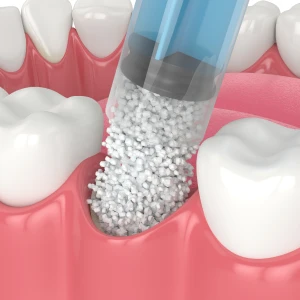
How Long Does a Dental Bone Graft Take to Heal?
A dental bone graft helps rebuild bone in the jaw after tooth loss, gum disease, injury, infection, or natural bone shrinkage. The graft material acts as a scaffold that supports new bone growth as your body gradually repairs and remodels the area.
The healing timeline depends on the type of graft and your treatment plan. In general, you can expect:
- Initial soft tissue healing within 1 to 2 weeks
- Early bone healing during the first several weeks
- Continued bone strengthening over several months
- Implant readiness in about 3 to 6 months for many patients
- Longer healing, sometimes 9 to 12 months, for larger or more complex grafts
The outside of the area may look and feel healed before the bone is fully ready. That is why your dentist will not rely on time alone. Imaging helps confirm whether the grafted bone has enough height, width, and density to support future treatment.
Dental Bone Graft Healing Timeline: What to Expect Week by Week
Bone graft recovery happens in stages. You may feel better after the first week, but the graft continues to heal below the gumline for several months.
Days 1 to 3
Mild bleeding, swelling, soreness, and tenderness are common during the first few days. Your dentist may recommend cold compresses, rest, soft foods, and prescribed or over-the-counter medication.
During this stage, avoid disturbing the surgical site. A blood clot forms over the area and helps protect the graft during early healing.
Days 4 to 7
Swelling should begin to improve. Some tenderness may remain, but discomfort should gradually decrease instead of getting worse. Continue eating soft foods and avoid chewing directly on the graft site.
You may notice small grain-like particles near the area. This can happen with some graft materials. However, if you see a large amount of material coming out or the area opens, call your dentist.
Weeks 2 to 4
The gum tissue usually closes over the graft site during this period. If your dentist placed non-dissolving stitches, they may remove them at a follow-up visit.
Even if your gums look healed, the bone is still developing beneath the surface. Continue following your aftercare instructions until your dentist tells you it is safe to return to normal habits.
Months 2 to 3
The grafted area continues to strengthen as your body forms new bone. Most patients feel normal by this point, but the bone may still need more time to support a dental implant.
Months 3 to 6
Many patients are ready for implant planning during this stage. Your dentist may take an X-ray or 3D scan to check the bone. If the grafted area is strong and stable enough, implant placement may be scheduled.
Some patients need additional healing time, especially after larger grafts or sinus augmentation.
What Affects Bone Graft Healing Time?
Bone graft healing time varies for each patient. Your dentist will estimate your timeline based on your oral health, medical history, and the type of graft performed.
Several factors can affect how long healing takes:
- Size of the graft: Smaller grafts often heal faster than larger ridge augmentations or sinus lifts.
- Location of the graft: The upper back jaw may need more healing time, especially when the sinus area is involved.
- Reason for the graft: Bone loss from infection, trauma, or gum disease may require a more careful healing plan.
- Type of graft material: Your dentist may use your own bone, donor bone, animal-derived material, or synthetic graft material.
- Smoking or vaping: Nicotine can reduce blood flow and slow tissue and bone healing.
- Medical conditions: Diabetes, immune conditions, osteoporosis, and certain medications may affect recovery.
- Oral hygiene: Bacteria near the surgical site can increase the risk of infection and delayed healing.
- Follow-up care: Attending follow-up visits helps your dentist catch concerns early and protect the graft.
If you are planning a dental implant, your dentist may also evaluate your bite, gum health, bone volume, and overall implant readiness before moving forward.
How Do You Know If a Bone Graft Is Healing Properly?
A healing bone graft should become more comfortable over time. Some soreness and swelling are expected at first, but symptoms should steadily improve after the first few days.
Signs that your bone graft may be healing well include:
- Swelling begins to reduce after the first few days
- Pain becomes easier to manage
- Gum tissue looks pink and healthy
- Bleeding stops and does not return heavily
- No pus, foul taste, or strong odor develops
- The area feels less tender over time
- You can slowly return to normal foods as directed
You should still attend your follow-up visits even if the area feels fine. A graft can look healed on the outside while the bone is still strengthening underneath. Our advanced dental technology, including 3D imaging, helps us confirm healing progress at each follow-up visit.
How Can You Support Bone Graft Healing at Home?
Your home care routine matters most during the first one to two weeks. The goal is to protect the surgical site, reduce irritation, and lower the risk of infection.
Follow your dentist’s instructions carefully. In most cases, these general steps can support healing:
- Eat soft foods such as yogurt, eggs, smoothies, mashed vegetables, and lukewarm soup.
- Avoid chewing directly on the graft site.
- Do not use straws during early healing.
- Avoid forceful spitting or vigorous rinsing.
- Start gentle warm salt-water rinses only when your dentist says it is safe.
- Take antibiotics, pain medication, or mouth rinses exactly as prescribed.
- Avoid smoking and vaping.
- Avoid alcohol during early recovery, especially if you are taking medication.
- Skip heavy exercise for at least 48 hours or as directed.
- Sleep with your head slightly elevated to help reduce swelling.
- Brush and floss the rest of your mouth carefully, but avoid direct pressure on the graft site.
For more aftercare guidance, you can also read Osler Dental Professionals’ guide on how to speed up bone graft healing after dental surgery.
When Can You Get a Dental Implant After a Bone Graft?
Many patients can get a dental implant about 3 to 6 months after a bone graft. However, the exact timing depends on how well the bone has healed. Your dentist will check the grafted area with imaging before placing an implant. The bone must have sufficient strength and volume to hold the implant securely during normal chewing.
Smaller grafts may be ready sooner. Larger grafts, sinus lifts, or grafts performed after infection may need more time. In some sinus augmentation cases, the bone may be allowed to develop for several additional months before implants are placed.
Waiting for proper healing helps lower the risk of implant failure and improves the long-term stability of your result.
When Should You Call Your Dentist After a Bone Graft?
Most bone graft recovery is manageable with proper aftercare, but you should call your dentist if symptoms worsen or something does not feel right.
Contact your dental office promptly if you notice:
- Fever or chills
- Pain that gets worse after the first few days
- Heavy bleeding that does not stop with gentle pressure
- Pus, drainage, or a foul taste near the graft site
- Swelling that increases instead of improving
- A large amount of graft material coming out
- Gum tissue opening over the graft site
- Numbness that lasts longer than expected
- A loose stitch or unusual pressure near the area
Early attention can help protect the graft and keep your treatment plan on track.
Key Takeaway
Bone graft healing is a gradual process because your jaw needs time to rebuild strong, healthy bone. While the gum tissue may heal within the first couple of weeks, the bone underneath often continues to strengthen for several months. Your exact timeline depends on the size of the graft, your oral health, your overall health, and whether the graft is preparing the area for a dental implant. Following aftercare instructions, avoiding smoking, and attending follow-up visits can help support proper healing and reduce the risk of complications.
Schedule a Bone Graft Consultation in Towson, MD
If you have been told you need a bone graft or want to know whether your jawbone can support a dental implant, Osler Dental Professionals can help. Our team uses digital imaging and personalized treatment planning to evaluate your bone health, explain your expected healing timeline, and guide you through each step of care.
Call Osler Dental Professionals at (443) 496-3166 for new patients or (443) 551-9059 for existing patients. You can also contact us online or visit us at 7600 Osler Drive, Suite 100, Towson, MD 21204.
FAQs
How long after a bone graft can I get a dental implant?
Many patients can get a dental implant three to six months after a bone graft. Your dentist will confirm timing with imaging to ensure the grafted bone is strong enough to support the implant.
Is dental bone graft recovery painful?
Dental bone graft recovery can cause mild to moderate soreness, swelling, and tenderness for the first few days. Pain should improve within a week when you follow aftercare instructions and take medication as directed.
What are the signs of a failed dental bone graft?
Signs of a failed or infected bone graft may include worsening pain, swelling, pus, fever, heavy bleeding, foul taste, exposed graft material, or gum tissue opening. Call your dentist right away if symptoms worsen.